My Bad Side – The Pitch

The time has almost come to get an agent. The book needs to be pitched…

Crystal and Dee Sinclair started life as a news story.

SACRAMENTO, June16, 1978 Two young girls – one an infant of 14 months – were found alive on Wednesday afternoon, beside their recently deceased mother, Dorothy Keynes, 33. Ms. Keynes was undergoing treatment for depression after the father of the children, Mr. Raymond Sinclair, was killed in alcohol-related single-car traffic accident on Sunday, May 4.

Lillian Murton of Sacramento Social Services made the discovery on a monthly wellness visit. Neighbors along the 7400 block of 21st Avenue expressed outrage that Social Services had not been to the home in the past week.

The elder sibling, 3 years of age, is believed to have fed both herself and her infant sister in the days following their mother’s death. The children are currently being treated for dehydration at U C Davis Children’s Hospital; their names have been withheld. Mrs. James Keynes of Pittsburgh, the mother of the deceased, has filed for adoption of the children.

My Bad Side begins many years on. Crystal, now 27, defiant, knows that her life was borne of tragedy and accepts that with a drink. I’ll tell you what everyone is like. Ever think about torture? Ever think about what that is? People torturing others, I mean, people actually willing to literally torture another person, strap someone down and torture, tear off their fucking fingernails, put wire through their flesh, burn their fucking eyes out, what the fuck else? These people will watch, just watch, another person freak out and scream. And for what? Because they fucking can. Because they can get away with it. That’s who we are. That’s what this is about. We’re fucked. We’re so completely and entirely fucked. (201)

Dee, desired and adored, was too young to remember, and yet the memory persists. She chases after it like a childhood dream, desperate for contact and pushing everyone away.  I had a tightness creeping inside. It wasn’t bad. It was more like almost remembering something, not what I had been told; it was more of a biological thing, molecular. It was spinning in my head. Words wouldn’t go together; the sounds were broken apart. I wanted this. I wanted to move into this, whole, that glacial wall of light, the sex, in and out in one pristine act. It was my promise. (157)

The sisters try to understand each other, but they don’t know how to forgive and feast on their addictions instead.

Downtown Manhattan: Guts on View

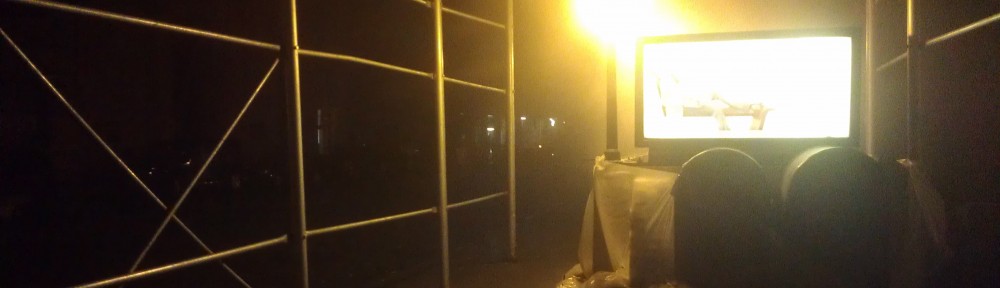
Downtown Manhattan has been under invasion for three weeks now. I’m not talking about the wind and tidal surge…but rather the vehicles and machines that followed. It started sensibly, almost innocently, with the official Disaster Response vehicles in tandem with the water pumping trucks and fuel tankers. There were also the portable generators and tractor trailers.  But then, the vehicles became ominous and strange.The streets began to look less like Manhattan and more like Terry Gilliam’s dystopic film Brazil. And so I began to ask myself: Just what are these daemonic vehicles and contraptions? Are they taking over? The answer wasn’t as mysterious as I had imagined. After a pittance of research, I learned that these imposing, brooding machines are generally one of three things. They are either mobile – albeit massive – generators, mobile – albeit massive – boilers,

Go Giants!

or mobile – albeit massive – dehumidifiers. In other words, the guts of the buildings are no longer hidden in the basements but outside, naked, for everyone to see. Yeah, I think you get the picture.

Roman Tragedies – Brooklyn Academy of Music

Roman Tragedies is a six-hour Shakespearean marathon presented in Dutch. As the director himself, Ivo van Hove, admits, this is a daunting prospect. “When we opened in 2007 [at the Holland Festival], I told the guy working for me who does the international tours: don’t invite anybody to come and see this. They will hate it.” He was wrong about that. Not only has van Hove merged these three tragedies – Coriolanus, Julius Caesar & Antony and Cleopatra – with a willingness to pare, stripping the imagery and language to its stark and brutal core, but he has also staged the piece in a manner so dynamic as to convince the viewer it’s all quite modern. Most innovative of all is the audience’s freedom of movement – not only allowed throughout the theater but also onto the stage itself. As gimmicky as this might sound, it actually works. We were reticent to move at first, enjoying our front row mezzanine view, watching the audience rush for ideal places, but we did finally head down – 2 1/2 hours into the production – to the back corner of the stage.We found ourselves suddenly amidst the conspirators during Antony’s famed eulogy. Friends, Romans, countrymen, lend me your ears.The energy was genuinely intimidating; Brutus was so upset that a small woman jumped behind me to avoid being hit.

Brutus absorbs the impact of Antony’s speech.

The members of this theater company, Toneelgroep, are dedicated to their craft; they throw themselves into the characters with a passion for the psyche of their roles, seemingly unconcerned for the trappings of costume and setting. But the staging really is the thing, using TV monitors, on-stage cameras, digital photographs of each character as they die – reminiscent of the last images of modern day tyrants such as Ceausescu, Hussein and Gaddafi. Not to be forgotten are the giant video screen, scrolling news stream as well as the thunderous roll of percussion and light. It is, without doubt, a memorable work. And if you don’t have time to get something beforehand, remember that they serve drinks and snacks right on stage.

Ode to the New York Subway

This isn’t in praise of the system, certainly not the cleanliness nor service, but rather a sentimental rumination on the aesthetics of industry and decay. The water stains and hanging wires, the rats chasing garbage, scurrying over carcasses of each other. It’s like art, something true. There’s the silence, the distant footsteps and then vibrations and the approaching train, coming and suddenly there, not yours but the express, flashing past the steel pillars, thick and black. It’s strangely idyllic, a place of calm and respite, the traffic and weather above, the air from the tunnel rising up, the train coming at last out of the dark air and dirt. The conductors wear protective glasses – for the grit and abuse – and might hold the train for the switch from local to express, but then seem to prefer the opposite. It’s just a game. I took the E train on a late-night trip from World Trade Center to Jamaica Center and back again. It was full at times – leaving Manhattan and into Queens – and empty too – coming back from Jamaica at 1:30am. I woke, the train idle in the station, half of the shiny blue slippery benches filled with people not going anywhere. I’ve been kicked – hard and with intent – and stood idle after a brute of a man jumped onto the train, having punched another – hard and with intent – and all of us stood there, quiet, eyes averted, complicit. It’s something deep, the furnace of this city, the noise and quiet, the dark and roar, the rush and the emptiness again.

Bad Side Movie – The Shoot

The Bad Side film short was shot last night, everything in 5 hours. Mike Deminico (Director) and Adam Holz (DOP) – and Joe Schiffer (AD) at the start – worked through the shot list like machines – some 50 shots in all – an impressive feat indeed.

Adam and Mike shoot opening scene

Gardiner Comfort (Derek) and Megan Hill (Dee) worked through the scene again and again,delivered on all of the fighting and yelling, through every shot – mediums, close-ups, point of views – with a professional focus, getting closer and closer to that feeling of loss and anger. Biba struggled in her role as a badly wounded serval, wanting to either get up or go to sleep, whichever wasn’t needed. Micaela Martegani  graciously took on the role of the doorman (woman) at the last minute. She was precise in her delivery and the jacket was a perfect fit. (Thanks, David.) I helped too. I drove. It was a nice car, a Mercedes C250 RWD, but the traffic was terrible – due to the on-going blackout and cleanup efforts in downtown Manhattan – and I missed the final set of shots. It was an interesting experience for me in the end, allowing others to take over my ideas, seeing the characters brought out, the framing choices made. It was not exactly as I envisioned it, but there was a moment listening to a scene, Dee yelling, that it felt like something really had come to life. Post-production is next.

New York City: Buildings Above Us

New York City has been called The Capitol of the World – albeit mostly by New Yorkers – and is iconically loved. It’s a great city, overwhelming in its needs and offerings, inhabited by peoples of all nationalities and faiths, many of whom live and work well with each other – as symbolized by their recent action and compassion to those devastated by Hurricane Sandy.

Volunteers at Occupy Sandy Hub in Brooklyn

But what New York is really known for is its money, its business and its buildings.

World Trade One

The unrelenting canyons stretch out, the sun barely there, the sounds and smells swirling within. And while there is a dynamic aesthetic to the steel and asphalt, there is something else, something sinister and unfeeling. As I blogged last week, many of these buildings remained fully lit through the blackout caused by Hurricane Sandy, buildings such as 222 Broadway (Bank of America)

222 Broadway on left

and 140 Broadway (Brown Brothers Harriman). There was no one in these buildings during the blackout, no one working, no one moving, no one. The assumption is that the employees simply couldn’t get to work and the buildings were kept lit and heated by generators, but it is an ominous image. It seems that these buildings just might aim to carry on without us…leaving us to wonder: “Who are they here for?”

Hurricane Sandy: Coping with the aftermath

One of the neighborhoods subjected to the most devastation by Hurricane Sandy is the Rockaways, in southern Queens. I rented a car and went to the Occupy Sandy Hub in Brooklyn to ferry supplies and volunteers. We loaded the car with food, diapers, cleaning supplies before heading out through the traffic and confusion. The Rockaways is a very long peninsula, spanning some 180 streets; many of the houses have been badly damaged by flooding; power remains out at most intersections; and the sand and detritus is everywhere. We drove slowly through the streets – slowed by emergency vehicles and construction equipment everywhere – and made our delivery at Inglesia Pentacostal Rehoboth.There was a gas station with no lines across the street, however I had rented a car with a license plate ending in zero (which counts as an even number in the current gas rationing system) and therefore was not supposed to have access to gas today. (The rule is odd number plates on odd number days). I thought about this and the fact there were not only no lines, but there were absolutely no cars either. It seemed like a good rule to break. I left my volunteers at the St. Gertrude Parish.

Directions from St. Gertrude Church

I returned to the Occupy Sandy hub for more supplies. I re-stocked with blankets, batteries and volunteers – three moderately hip 20-somethings from Brooklyn – and was directed out to Coney Island.

Coney Island’s iconic Wonder Wheel

Coney Island, a geographical neighbor to the Rockaways and yet separated by many miles of roads and traffic, appears to be doing better than the Rockaways, but is still struggling with a lack of power and an excess of sand

Neptune and Surf

and muck. We delivered food to a small apartment building, climbing the cold dark staircase, knocking on doors and doing our best to communicate with the mostly Russian inhabitants. I was brought into the apartment of an elderly Russian lady who showed me how she has cleaned up after the six inches of flood water. She didn’t need food or water. She had been provided with those. She needed her power to be turned back on. I couldn’t do that. We hugged instead.

My Bad Side Movie: Rehearsal

We just had the first rehearsal for our short film, Dee, based on the novel, My Bad Side. The actors are excellent. Megan Hill is Dee with Gardiner Comfort is Derek, while David DiGregorio will play the doorman. Biba decided not to rehearse for her role of Apollo.

Ready for her close up

Megan and Gardiner work very well together; it is something to see actors give life to characters, not exactly what you anticipated and something more as well. Mike Deminico directs the production with Adam Holz on camera.  There will be a lot of handheld work and a lot of movement. It might be black and white; that hasn’t been decided. But there will be close ups of high heels on the pavement and a struggle for the knife.

Dee towers over Derek

The shoot is on Wednesday. It doesn’t seem real. I wonder if I should have left Dee alone on the page.

Remembering: Wodiczko’s Lincoln

Today is a day of contemplation, a day to remember those we have lost, who we are and what we may become. More Art’s presentation of Krzysztof Wodiczko’s Abraham Lincoln: War Veteran Projection asks us to do just that. The work, now on display in New York’s Union Square Park (at 16th Street), is a 24-minute projection loop of war veterans expressing their feelings on the damaging effects of war. Faces, projected onto the statue of Abraham Lincoln, bring the spirit of this icon to life. And they speak:

I know a veteran that committed suicide because he had nobody to talk to. He couldn’t talk to anyone and he lived on the streets. He died alone.

It came from not being able to sleep for a day to an entire week.

The daydreams, they sneak up upon you.

I couldn’t live alone and at the same time I couldn’t live with anyone else.

When I came back, the worst thing that happened to me was the rejection of the people.

We can do so much more when we put the gun down.

Wake up, people! Help the veterans. Do something for the veterans. The installation, on display 6-10pm from now until December 9, is a great work of public art. Accessible, powerful and relevant, the work reaches deep inside the viewer and really does ask who are in this world today. Krzysztof Wodiczko should be thanked for this. More Art should be thanked for this. And most of all the veterans should be thanked for this.

Words V: Compromise

Compromise (verb): Settle a dispute by mutual concession.

Compromise can be a noble action. It is something that leads one from an extremist position and actively helps in avoiding acts of conflict and war. It’s an action to which we should aspire, and yet an action that evokes terror to those in power. When asked to compromise to avoid the upcoming fiscal crisis, House Speaker John Boehner, balks, insisting that Obama intention to raise taxes on the wealthy “will destroy jobs in America.”Boehner, like many other in the Republican Party, are wedded to a pledge of not raising taxes and believe that to compromise is to sully this position, or, as the dictionary says: to weaken a reputation or principle by accepting standards that are lower than is desirable. A good example of this is what happened to New York when it was compromised by the tidal surge of Hurricane Sandy or what has happened to the public reputation of David Petraeus in admitting to his extra-marital affair.

Mr. Petraeus and Ms. Broadwell

But this not the understanding of the word when opposing groups are asked to seek compromise. As absurd as it is to think, even those negotiating the current dispute for the National Hockey League believe this as well. Players’ representative Donald Fehr and League Commissioner Gary Bettman remain entrenched in their positions, 56 days into the lockout and only a short time from potentially cancelling yet another season. They don’t seem to understand that if there is no hockey, there is no revenue…and leads us to another interesting word: extinction.