Young Chronicles XVII: Winnipeg, to Saskatoon

The Young Chronicles details my 1983 hitchhiking trip across Canada. Having completed the Toronto-Newfoundland leg, I continue west from Manitoba to Saskatchewan.

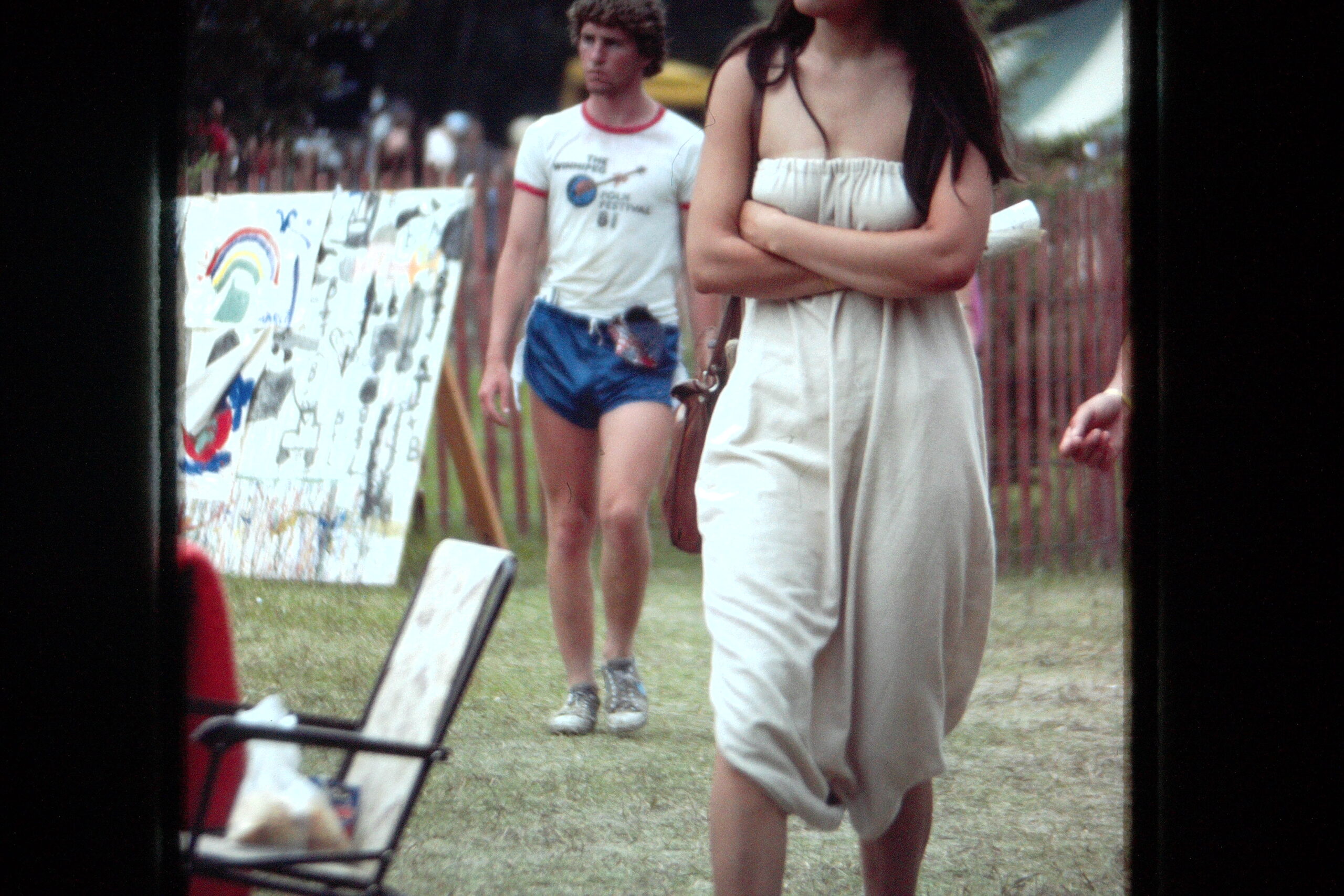
July 8-10, 1983 Stayed at hostel and attended Winnipeg Folk Festival. Queen Ida and her Zydeco Band was the highlight of the event.

July 11, 1983 Mileage 356 miles

Ride One: Downtown Winnipeg to outskirts of Winnipeg. Old blue Volvo. Guy who had been to St. John’s. Had a hard time of it and has vowed to help others.

Ride Two: Highway 16 to Brandon, Manitoba. Red pickup truck. Group of Native Americans going to The Gathering. Woman gave me six cookies.

Ride Three: Brandon to Regina, Saskatchewan. Chevette with Illinois plates. Jeff Gibbs headed to Alaska. Had been stationed in Germany as a computer programmer on Pershing missiles. Went to jail for drunk driving with 1.5% blood alcohol.

Jeff Gibbs shows his Reaper drawing in Saskatchewan

July 13 Middle-aged couple. Woman said that I reminded her of the dawn. She had just won the lottery and was frying a salmon in the park. I was invited to join. Man became abusive when he was drunk and accused me of sponging. Returned to hostel, locked out.

July 15, 1983 Mileage 164 miles

Ride One: Regina to Wattrous, Saskatchewan. Old pickup truck. Wild looking man in a dirty green shirt. “No matter what you have, it always has value somewhere.”

Ride Two: Wattrous to outskirts of Saskatoon. Blue station wagon. Middle-aged woman with two kids. Drive past me but her kids insisted that she go back. “You’ve been nice company.”

Farm equipment outside Wattrous, Saskatchewan

Ride Three: Outskirts to Saskatoon hostel. Early ’70s car. Long-haired smoker. “You do your thing, and I’ll do mine.”

Writing Process: Knowing Thyself

I don’t know who I am. I pretend to have it crystal clear at times. I even proclaim that I know things and might even really think that I do. But it is fleeting.

I haven’t confined myself to a career. While I might have taught for many years, I don’t identify as a teacher. I snuck into the profession and messed around. And that is all.

The United Nations International School, a place where I used to work.

I have also had no success as a writer, and so neither am I constrained by the limits of thinking that. Nobody reads what I write, and so I don’t really do that. It isn’t real.

I know people and talk to them, but I don’t actually know anyone. I don’t live in the country of my birth and hide out in a city of faux intellectuals. Drunks, I mean.

33rd Station on New Year’s Day

I am on a great clipper ship with nothing but clouds all around. And I think that I am clever and creative because I am writing that. But I don’t know who I am and never will.

Arguing The Arc: Writing Process

While there are many aspects of the story arc that make sense in terms of pacing and development – like good old hamartia – the arc is a dated idea, limiting our understanding of who are to exacting plot points that only satisfy writing coaches and network executives.

Stream of consciousness is not the answer nor is it supposed to be all higgledy piggledy, but a style that reflects a understanding for ourselves. Reality television is the bald ugly version of this or the latest insanity of Trump’s dying days.

Tierra’s Eyebrow might be reality television’s greatest work

An amalgamation is needed of the two, an arc that that follow a path and yet simmers and U-turns with significance. That is my aim in The Cx Trilogy, to guide readers into a world and leave them there to look around.

The McPhedran Way – A Typical (Bad) Day in My Writing Process

6:30 am Play Fishdom and Words With Friends. No thoughts on writing.

8:30 am Play Fishdom. Read emails, watch YouTube videos and search for “inspiration” by porn surfing. A general malaise dominates thinking.

11:00 am Half think about writing but retreat from that, afraid to start.

12:30 pm Lunch. Watch random bits of film – anything from Battleship to The Life Aquatic with Steve Zissou.

2:00 pm Ride stationary bike and listen to intense music (Rage Against the Machine, Cheap Trick, Nine Inch Nails, etc.) in an attempt to get brain moving. Watch birds flying past, beds being changed in hotel rooms across the street and people working in adjoining business. Writing problems do not come to mind.

Entertaining things can occasionally be seen in Artezan Hotel.

3:00 pm Read more emails, watch more videos and porn. Snack.

4:30 pm Open the Anori document. Close it. Play Words with Friends and Fishdom.

8:00 pm Think about what I might do tomorrow

So it goes on a bad day. Which oddly enough can lead to a good day.

The McPhedran Way – A Typical (Good) Day in My Writing Process

6:30 am Think about the big picture things – characters, theme – when I wake up.

8:30 am Ideas drift around for the next few hours as I sort through emails, purchases, music downloads and desk cleanup. These activities get my brain moving, akin to rocking a car back and forth out of the mud, until I think it might be ready to gun it and get on the road.

11:00 am Review what I wrote the previous day(s), read through a scene or two, and identify problems – weak dialogue, weird scene arcs – and make brief edits.

12:30 pm Lunch, news and emails. Maybe apply for a new job.

2:00 pm Ride stationary bike and listen to electronic music (Fripp & Eno, Ekca Liena, Keith Berry, Endless Melancholy) or The Grateful Dead. The first twenty minutes of my workout is about the workout, focusing on getting my heart rate up, and then begin the process of thinking of what I need to do, generally research and blogs. And then I think of my first writing problem. Why is the chapter not moving in a clear direction? How do I get it to do that? How do I avoid repeating myself and get my characters to stop sitting around and bitch about life. Things need to happen. What if I move the launch to the end and the conversation and Lai’s scene to the start?

And so it goes. I review the ideas and accumulate more and more, until I am up to as many as I can remember – my maximum is around a dozen – and then repeat them in my head until I can get them in a pattern. I finish the workout and write notes on everything I can remember – hopefully all of it.

3:00 pm Enter the ideas into the text while listening to electronic music.

4:30 pm Write. Momentum on my side, this is where I write and write. This might go for another 3-4 hours, pauses and beers in between, until it begins to taper.

8:00 pm Save some things for tomorrow. I agree with Hemingway’s assertion that writing to the last drop is a dreadful error. That only means that tomorrow there will be nothing. The next day too. And so I leave an idea or two on my screen to help me regain my momentum tomorrow.

So it goes on a good day

Writing Process: Finding My Way

Years ago, I read an interview with James Bond author Ian Fleming who detailed his daily writing regime at his Caribbean home. He would rise early every morning and write five pages by noon and then spend the rest of the day at the beach with a cocktail in hand.

The Sanibel Island Writing Contest offers many places to bask and ponder

I liked the idea so much that I blogged about it and mimicked it – albeit without the beach and Caribbean home. I wrote five pages every day for my first novel, The Sacred Whore, but realized that the pages were weak and ill-conceived. I was going through the motions to get to my metaphoric (and literal) cocktails.

Later on, I tried writing at different times – afternoon, evening and night – with a similar page count in mind. No dice. Fleming’s process simply was not for me. I needed something else. I needed my own process.

Notes for All In written on a newspaper

Something that I have learned over the years is that I don’t work well with an exact routine. My system tends toward the erratic. That is not to say that I don’t have a system, but that when I am overly regimented, the work loses its divination.

That said, when the writing is working, I have a pattern that works. I suppose you might call that The McPhedran Way. More on that tomorrow!

On the Cusp, With Resolve

As much as I might decry New Year’s Day, there is something about starting something new, being on the cusp, as it were, everything ahead, coming at you.

There is no better place to be. But we have to be ready and willing. As the polar explorer Alfred Wegener said, Nobody has accomplished anything great in life who did not start with the resolve, ‘I will do it or die.’

Alfred Wegener leads an expedition to the center of the ice shelf in Greenland in the 1920s.

Here’s hoping that we figure that out in time.

The Fallacy of New Year’s Day

Many songs are written about it – U2 and Rage Against the Machine come to mind – but there is nothing to it in the end. New Year’s Day is a falsehood. Nothing will change today.

Yes, Trump is to be removed and the pandemic calmed. But what then?

What about the problems with Biden, racial inequality and the next virus? What then?

We can certainly dream and pretend that something better awaits. We’re good at doing that.

But really, what then?

Writing Process: Lost Images

As of late, I have been scouring through old images (prints, negatives and slides) in search of material for my Young Chronicles series. However there is one picture I cannot find, that of a boy looking back through the gap between a bus seat and the wall. All I can find is this lesser shot of his hand.

Boy’s hand on bus trip from Edmonton, Alberta to Whitehorse, Yukon.

Not being able to find the image of the boy haunts me in an odd way. I don’t know how I could have lost it and look for it again and again. To no avail.

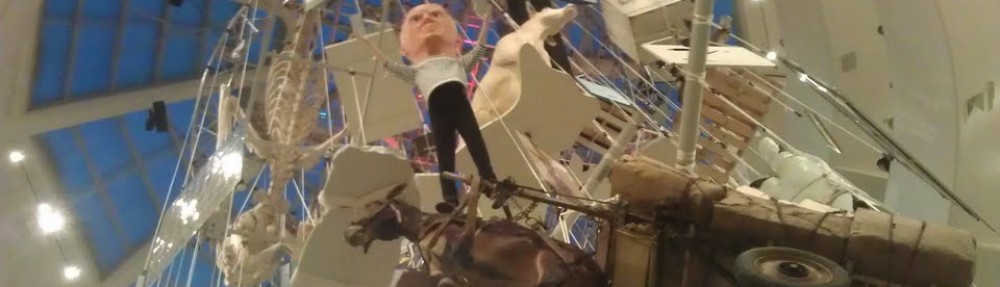
The feeling reminds me of a fruitless search as a boy at the Royal Ontario Museum in Toronto. There had been a exhibition on the Amazon that I had loved, but it was a temporary thing and had vanished forever.

Searching for the lost Amazon exhibit at the Royal Ontario Museum in Toronto.

That didn’t stop me from endlessly searching the corridors and rooms, peaking behind the dioramas, looking for the secret passageway that would lead me back to that magical place. I am still looking for that.

U Turn Memory

I have a memory, if it can be called that, a moving image that bubbles up when I’m writing.

It is of a stretch of road called Marine Drive, connecting North and West Vancouver. It’s a thoroughfare, three lanes each way, thick with strip malls and autobody shops on each side.

Nothing happened there that I can remember. I just have to make a U turn. That’s the memory. I have to get back to something. Not a place, but a person, someone I left on the side of the road. And I am waiting to make that turn.

Not Marine Drive, not even close to it.

But I never make the turn because the light doesn’t change. I just wait and look at the orange and white sign for the autobody shop across the way.