History in the Nettles

I was convinced that everyone knew where I was going. I felt it the moment I left the apartment. I saw it in the eyes of the two brush-cut men facing me on the train, in the way the train conductor checked my ticket, in how the French tourists glanced my way as they got off the train to see the castle at Marburg. I was going another two hours to Olsztynek, to the ruins of the Tannenberg Monument – called Mauzoleum Hindenburga on Google Maps – where the Nazis held their massive rallies in the 1930’s.

There were no signs at the Olsztynek train station, nothing past the cemetery nor through the park, just an empty trail, the trees thick overhead. I glanced behind and on either side, expecting an ambush.

I came out onto a small highway, past a family in dirty clothes, filling old jars with blueberries. I offered a weak nod and thought about buying a jar and turned at a muddy road and then another before arriving at the sign.

The text was sun-bleached, almost impossible to read: During the nazi times, Tannenberg-Denkmal gained the highest rank of a nationwide monument and became a place of pilgrimage. After the war, it was completely dismantled. Only some fundments and bodies of 20 unknown German soldiers remain until today.

There was another sign up the path, in better condition, the site behind it.

The nettles were waist high, a vague beaten-down path where someone had traipsed leading in. The ground was uneven, the bugs getting in my eyes and mouth. I stopped to spit and see if I might glimpse anything, the edge of a stone, the semblance of a clearing, and went further, thinking I should turn back, the nettles tearing at my pants and shirt. A small copse of trees appeared to the left and the orange of brick. I bushwhacked straight for that, pushed back the nettles and kicked at the dirt, digging out a few heaps of smashed-up brick, a colony of red ants spilling out at their base.

The Google reviews had made it clear; there really was nothing to see. And so why? Why go to a disgraced place and dig around? Was there a message of some kind? A feeling? I considered the surrounding trees and thought about how peaceful it might have been without the bugs and nettles, the uneven ground and the nerve-rattling Feng Shui.

My map offered a brief observation: “Busier than usual”. I didn’t know what to make of that. Was one person really busier than usual? Do we just want to forget all of this, not dwell on how the Nazis tore societies apart with their violence and anger? I suppose that might be a fair sentiment just as long as someone a hundred years from now doesn’t have to go looking for similar ruins at Mar-a-Lago.

I Need to Figure Out the Recycling First

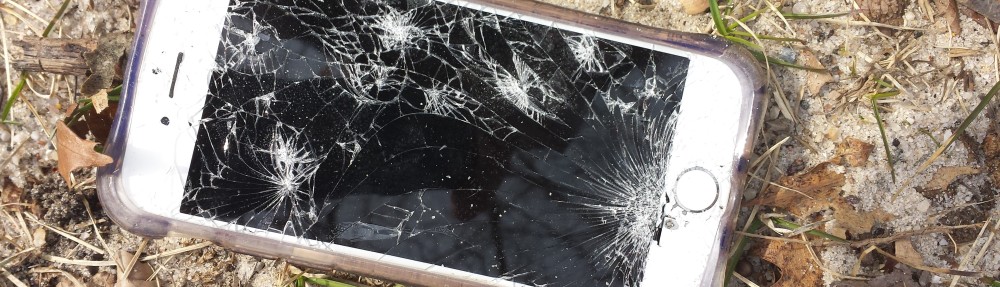
I’ve been trying to get back into my writing. I just needed to acclimatize and stop scrolling so much. I’m in Poland now, which means there’s lots to figure out, including the recycling. They have different rules, different colors of bins and of course the language. I’ve been ignoring the accumulation of bottles and plastic even though I’ve seen the recycling machine at the supermarket. It looked easy enough, but I was intimidated and stayed in my funk.

Not quite this bad. But getting there.

It wasn’t just the recycling. I wasn’t going out to see anything either. I’d planned to visit the Tannenberg Memorial ruins where the Nazis had buried Hindenburg and made their speeches about getting East Prussia back. I’d reviewed it in the guidebooks, checked the train schedules and weather and planned to get there on Friday and then Monday. But I didn’t.

The Germans blew it up at the end of the war, but there’s apparently a few bricks left.

I can handle the food and laundry and distracted myself with the World Cup, even if was a dreadful bore. You’d think the Argentinians would try to be a tad more likable, given their Nazi-aligned past, but they’re so fully in with their racist taunts and hateful faces, it’s like Eichmann and Mengele are in the stands. Watching their questionable play doesn’t seem much different from the bombings in Kyiv and Iran, the Russian Invasion now longer than WWI, and Trump beetling on to WWIII. But I digress.

The Argentinains wouldn’t want try this nonsense against the Canadians.

I did work up the nerve to take in the cans – I’d run out of beer – and it was mostly a success, even if some were spat back and the cashier got irritated with me when I couldn’t explain to her why I had given her the receipt. I thought it was clear. And so now I have my beer, perogi too, and Spain has won. It’s true that I’m still scrolling, but Rage Against the Machine’s live Bulls on Parade might be my take-off point. I just need to watch it a few more times.

Numb and Weird: The Joys of Contentment

It’s a compelling thing to save a fat jolly cartoon king from a dragon. Or not save him and watch his disappointed expression. Or be crushed by molten lava. That was another one. All I had to do was match the little green clovers, yellow crowns, blue shields and red suitcases or blow them up with canons, bombs and spinning magic balls. It was just like Fishdom, the game I had played in the pandemic days.

I made it through thirty rounds and then deleted the app. My head felt weird and numb. I was unable to focus, and a headache was blooming. I turned on the TV and watched a decent enough film about the Fox women getting sexually harassed, although it was irritating in the end because there was no one really to root for. Megyn Kelly as a hero? Yeesh.

Charlize Theron, Nicole Kidman and Margot Robbie in “Bombshell”

I reopened the app and flew through the levels, more than a hundred in four hours. I knew that it was just a silly thing and I would blog about it. And then I ran out of the bombs and magic spinning balls and the bonus time. I would have to either wait for more lives – a new one every thirty minutes – or pay.

I began a book about Poland and Prussian history, Max Egremont’s Forgotten Land, Journeys Among the Ghosts of East Prussia. There was a lot going on here, Teutonic knights massacring the locals 700 years ago and then a constant bloody mess between the Germans and Russians. Not to mention the Poles themselves.

Max Egremont’s Forgotten Land, Journeys Along the Ghosts in East Prussia

I checked my phone. I had five new lives and got on roll, not just the Standard levels, but the Very Hard and Extremely Hard ones too. I planned to stop at Level 200, but I didn’t. I had to wait it out a couple of times, but I got up to 265, my phone occasionally slipping from my hands, my head lolling forward, but I made it, fmatching the little green clovers, yellow crowns, blue shields and red suitcases like a master, exploding boxes the piggy banks and getting the little red birdies and snuggly alligators out of the maze.

It was all about me doing nothing, being mindless, getting to one more level. The thing was that I could do stuff if I wanted to. I really could. But I prefered to adjust my pillow and see what was next. It almost felt something like happiness. Or death. And don’t get the wrong idea. I could stop whenever I wanted. I wasn’t addicted or anything. I was doing this for my blog, research on the idea of addiction. That was the difference. I would uninstall the app soon enough. After the next level.

Witold Gombrowicz’s Cosmos

What riveted me to the behind and beyond was the way that one object was behind the other, the pipe was behind the chimney, the wall was behind the corner of the kitchen, just like at supper when Katasia’s lips were behind Lena’s little mouth.

Gombrowicz’s 1965 novel Cosmos, the inspiration for my previous blog, deals with the introspectively demented interior of a young man staying at a boarding house.

When, waking at night, we could swear that the window is on the right, the door behind our head, our single orienting sign, the light from the window or the murmur of the clock, enough for everything to fall into place in our heads, all at once and in a definitve way, just so.

This isn’t the stuff we text about, that we comment on, that we are taught, but the stuff in our heads, the unnamable jumble inside, that defines us. If we could only make it make sense.

“Sir, you are a masturbator.”

“Ha, ha, ha, you’re right, berging with a berg doubly, triply, with a particular system of the on-the-quiet-berg at every hour of the day and night, and most eagerly at the family dinner table, bemberging a little under the eyes of my little wifie and daughter! Berg! Berg!”

Unsayable things said, untruth truth, it not it, something half of that, ad nauseum, that is supposed to be let be, sophomoric nonsense, bibble babbling, jimmy jam, like that.

I looked around, everything here below had changed, though it was still light – but a germ of indifference appeared, a crowding and abandoning. something like turning the key in the lock, and the mountains, hills, stones, trees were solely unto themselves and signifying their end.

It is something to find genuine writing, writing that isn’t contrived, that isn’t looking for a publishing deal, but as filmmaker Jafar Panahi says, “those who tell their own stories”, the story for itself, something that makes me think I have to get back to it and will do that soon, out of the morass and onto the bald-faced plain.

I pondered and thought very deeply, tirelessly, yet without a single thought, and I was now beginning to be scared, truly scared.

Tragic Tiny Things

I had been alone for much of the day, not knowing where everyone had gone. The tide was coming up, the clouds descending.

I climbed the sand bank and went along a row of luxurious homes, peeking beneath the cement pilings to what looked like a little sandy basement piled with boxes and toys. There was no sign, no barricade or lock, just a plastic toy train, which I moved out of the way.

A large group of children followed me. I knew I shouldn’t have let them in and confessed my trespass to the family upstairs who I somehow knew. They expressed their anger with tight faces and phrases uttered under their breath. They forgave me and explained that this was a place of silence, of memorials and things locked away.

It was a moment of revelation for all, letting these things breathe and talk to one another again and express the sadness for our torn lives.

Teen Speak

I recently received the following voicemail from a student: Actually last week. The calculator. Oh, Jesus, no, no! (Audio unclear)That was so loud. Mr. Ellen might come over here. Here we go, move on. What else you got? We’re running out of time. How’s your day? Because you can’t. This kid keeps asking me questions and they don’t have a question anymore. How was your day? Bob, I’m out. What’s the information? Yeah. It would not be shocking. It would not shock me tomorrow.

Anger > Fear

I’m spooked listening to my breath, thinking that it might be somebody else ready to tear me apart. I turn my phone around, and there’s nothing there. I’m stupid enough to think that this might be real. A child, still a child.

I’m driving the winding road at the bottom of the city, thinking it’s the next left and never getting there, searching for whatever and it always being ahead. I’m lost. Maybe worse.

I’m on the phone. No one’s answering. I limp across the street. The door won’t open. There’s a siren and then another. I vanish into the dark and walk and walk. The anger comes first and then the fear. I work myself up and get back to the anger. I want that sense of control as the bear chews off my face.

That Millenia-Old Myth

My girlfriend saw her ex across the room and was insistent about talking to him alone. I could hear everything they were saying, and then I couldn’t. She was gone when I looked over again.

“She had to sort something out with him.” That was the waitress, a once lovely woman with too much mascara. “I hope you have a healthy relationship.”

“The lies of love and how this millennia-old myth has kept civilization barely afloat.” I finished both drinks and ordered again.

There was a graffitied phone booth in between the bathrooms, and the phone actually worked. She didn’t answer. But my mother did. She was disappointed in me and wanted to know where I was. Things just got worse from there.

The Tininess in My Head

The island where I was born has untold manifestations in my head. It is tiny and vast, empty and overbuilt, extensions from every building, every building gone, the path across hills and prairies, leading to a barren rocky point that never was.

I’ve circumnavigated the island many times, down from a steep ridge, the water choked with ice, a canoe at the ready. I need to go back for a paddle and watch everyone leave. There’s a menagerie of animals in the water, fish and seal, cats and birds, and a miniature sheep that fits in my pocket. Half asleep, I do the breast stroke to the bottom.

A message from my realtor comes through; someone wants to buy the island. I’ve already left. That’s what I text. I don’t intend to return. I get a question mark back and reply with a meme of the sheep in my pocket.

The Man in the Mirror

I thought it was funny at first, this guy mimicking my every move. He was one of those fake plant people that popped out of nowhere and he got the nervous laugh.

I smiled as I walked away, but he wouldn’t stop, imitating my every step and gesture, every facial expression, always staring back. I wanted him to stop. I told him that. And he said it right back.

“No, I mean it.”

“No, I mean it.”

“I’m not fucking Pee Wee Herman.”

That drew a gasp, especially when he repeated that.

I pushed him, which he did back, and came after me. And so I punched him good and made him hurt. I was the villain and accepted that happily.