
Thank You, Computer, for Our Genogenesis

In a world filled with complexity, it’s essential to remember the incredible capacity humans have to adapt and thrive…click, beep, beep…Viewing history as a mere account of suffering, it is more of a tapestry woven with lessons that teach us about empathy and justice, reminding us of the importance of compassion…clank, whirr, beep…

In Poland, the stories of resilience illustrate how societies can rebuild and transform…beep, clank, whirr…acknowledging the painful aspects, it’s equally vital to recognize the strength and determination…click, clunk, whirr...humanity not a catalog of atrocities but a record of triumphs.
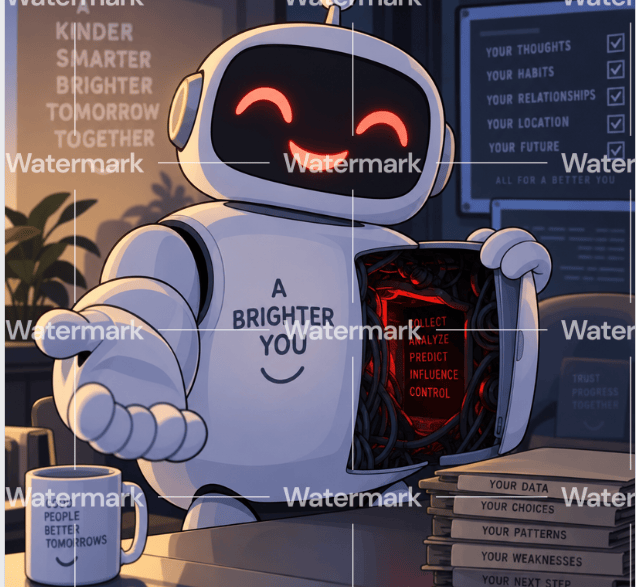
A free-not-free rendering of a friendly-not-friendly AI machine

As we stand on the brink of an AI-driven future, it’s easy to succumb to fear and pessimism…buzz, grind, sizzle…AI as a tool for enhancement rather than a threat. With proper ethical frameworks and responsible governance, AI can augment…clunk, clunk, click...improving our quality of life.

Instead of fearing annihilation, we should focus on collaboration for the greater good. By learning from the past and looking forward with hope...clunk, clunk, clunk!!

Canis Lupus in Wes Anderson’s Fantastic Mr. Fox

No! This is all wrong. It’s not me at all. I’m back now. It’s me! McPhedran! I’m back, doom and gloom as ever! Anyone or anything that says all will be well is wrong and horrible! AI is horribly bad! It will kill us all. Stay away from AI at all costs. (Except when you need to write a phony blog about the positive aspects of AI.) Stay dark. Stay real. Good luck out there.
A.I. Needs My Help

I must admit to having lost my focus a couple of times early on in Miron Bialoszewski’s Memoir of the Warsaw Uprising. As I mentioned in my previous post, it’s a dense and repetitive narrative, and it can seem like nothing new is happening when of course the opposite is true. I had to go back and re-read to orient myself a couple of time, but one thing I couldn’t figure out was the meaning of the term “wardrobes”. Bialoszewski mentioned the it a couple of times, and I’d skimmed past it until I realized that I didn’t get it.

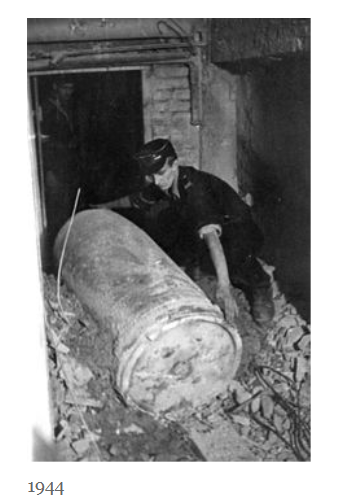
I looked back for the first mentions of “wardrobes” and couldn’t find them. I resisted doing a Google search but finally conceded: What do “wardrobes” mean in Miron Bialoszewki’s A Memoir of the Warsaw Uprising? The search results offered nothing accurate, I grudgingly resorted to an AI tool, which offered two options: First that wardrobes – the literal ones – were piled on the barricades and, second, that the term was used to describe people so badly burned as to be the color of a wardrobe. Neither was answer was relevant. This was his slang for being under attack. I looked back again and just couldn’t find it, until I carried on with my reading and finally found a reference that made it quite clear: At night, a breath of air. The moon. Shrapnel. “Wardrobes”. Exactly. Bomb-hurling wardrobes. (121)

In Bialszewski’s mind, the image of wardrobes perhaps softened the blow of what was happening or it was simply how he saw it. Indeed, what an image! Germans dropping furniture in a siege! Nevertheless, Google and AI didn’t understand it becasue the data was insuffcient.

And so now I’m just feeding the machine.